
Criminal Court Records in San Miguel County
A criminal court record is the case-level file kept by the New Mexico court system after a criminal matter is opened. For San Miguel County, felony cases and major criminal proceedings are handled in District Court within the Fourth Judicial District. Magistrate Court handles misdemeanors, DWI/DUI, traffic offenses, felony first appearances, and preliminary hearings. Municipal Court handles municipal ordinance cases, petty misdemeanors, DWI/DUI, and traffic matters without jury trials.
The file is not the same as a jail roster entry. Jail and booking records may show a person in custody and the arresting or booking charge, while the criminal court file shows prosecutor-filed charges, court hearings, plea activity, orders, judgments, and sentencing. When the issue is the arrest-to-charge pathway rather than the full case file, use the arrest records and charges page for that distinction.
The Fourth Judicial District Attorney prosecutes criminal cases for San Miguel, Mora, and Guadalupe counties. The official district attorney page identifies Thomas Clayton as District Attorney and lists the San Miguel County main office in Las Vegas. That office is relevant when explaining who files and prosecutes charges, but the official court record remains with the court where the case was filed.
The Fourth Judicial District Attorney page is an official source for the local prosecuting office. The screenshot below comes from the Fourth Judicial District Attorney page.
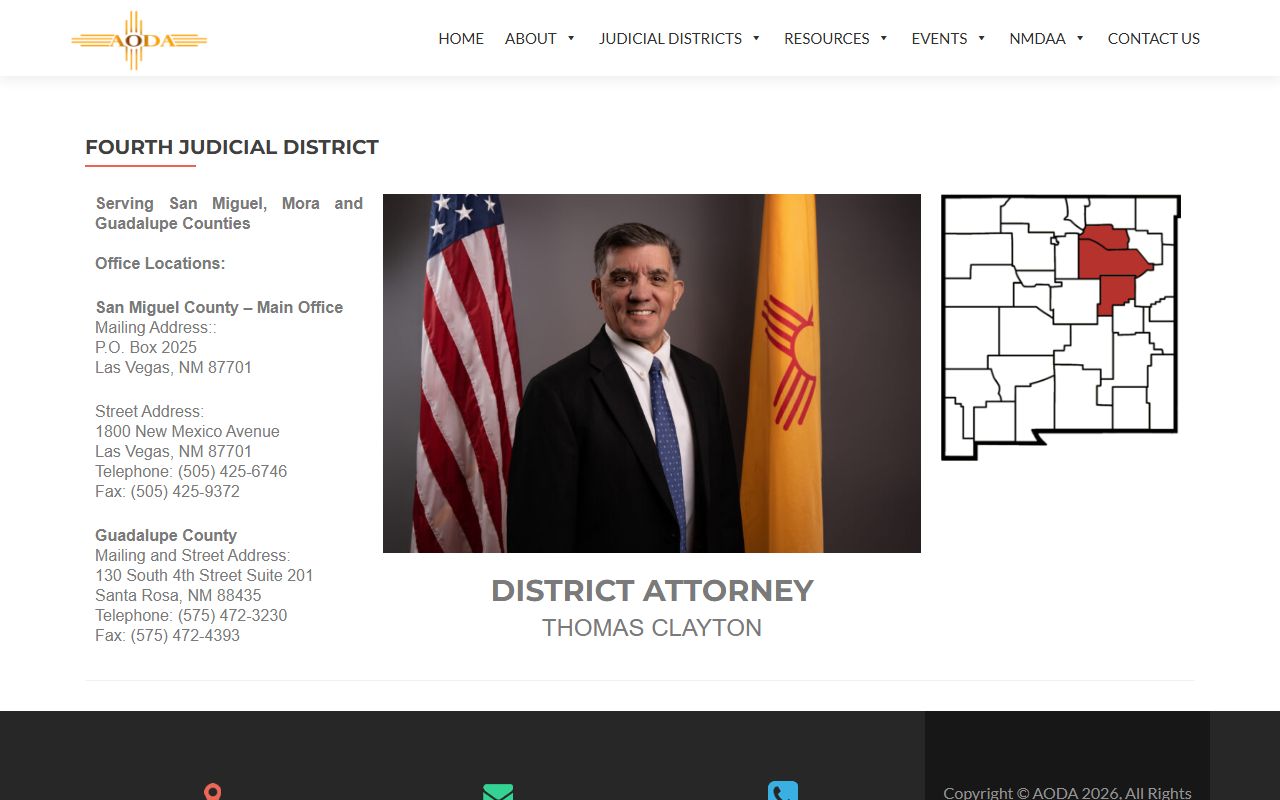
This source ties San Miguel County criminal prosecutions to the Fourth Judicial District, while court case access still runs through New Mexico Courts and the local court counters.
How to Search San Miguel County Criminal Court Records
Start with New Mexico Courts Case Lookup. The public search opens after a disclaimer and allows a name search by party name, driver license information, date of birth, court type, location, case category, filing date, hearing date, and result count. For San Miguel County criminal matters, the most useful location filters are District Court location 412 - Las Vegas and Magistrate Court location 48 - Las Vegas. Municipal matters may use Las Vegas or Pecos municipal locations when available.
- Open New Mexico Courts Case Lookup and accept the disclaimer if you agree to the individual-record use limits.
- Search by defendant name in Last First Middle format, or use driver license and date of birth when those details are known.
- Limit the search by court type, location, case category, filing date, or hearing date if a common name produces too many results.
- Review the case number, court, docket entries, charge list, hearings, disposition, and sentencing information shown in the public view.
- Use re:SearchNM or contact the court clerk when a document, certified copy, or older/nonpublic detail is needed.
Case Lookup is strongest for case metadata and docket-style entries. re:SearchNM is the registered-user document access path for Odyssey case information and documents, with access controlled by user profile and New Mexico court rules. If the online record looks incomplete or inaccurate, the Case Lookup disclaimer directs users to notify the court where the case was heard. In San Miguel County, District Court is at 496 West National Ave., Las Vegas, phone 505-425-7281; Magistrate Court is at 1927 Seventh St., phone 505-425-5204.
The New Mexico Law Offices of the Public Defender office locator is relevant when a defendant needs appointed-counsel contact information. The locator was captured from the official LOPD offices page.
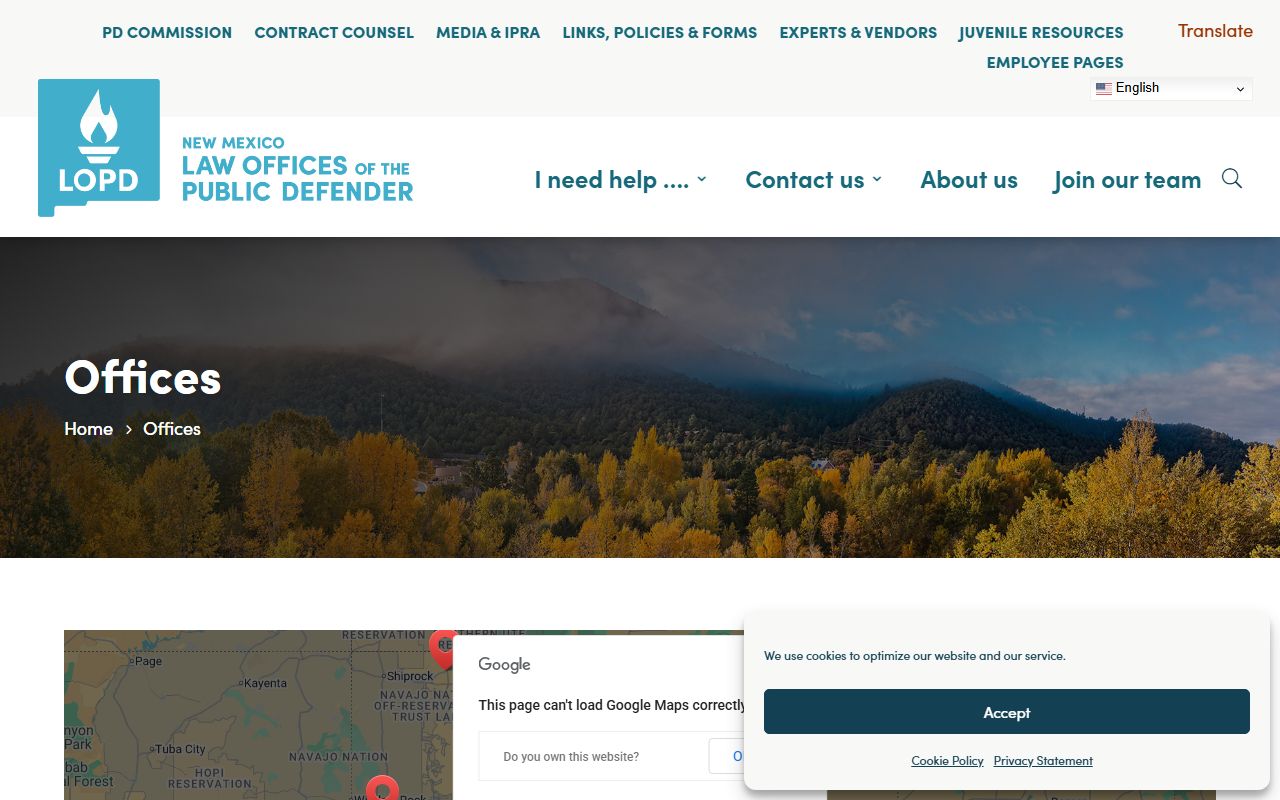
The research did not locate a reliable static Las Vegas office block from the official locator, so the page preserves the statewide locator path instead of inventing a local public defender address.
Stages of a Criminal Case
Criminal case records change as the matter moves from an arrest or referral into a filed court case. Magistrate Court may see the earliest felony proceedings through first appearance or preliminary hearing, while District Court handles felony files after bind-over, information, indictment, or other felony filing. Misdemeanors, DWI/DUI, traffic, and ordinance offenses may remain in Magistrate or Municipal Court depending on the charge and issuing agency.
Case flow: Arrest or referral › complaint, information, or indictment › first appearance or arraignment › preliminary hearing when required › motions and hearings › plea or trial › disposition › sentencing and post-judgment events.
| Stage | What Happens |
|---|---|
| Complaint or charging document | The court file begins with allegations, counts, offense dates, statutes, classification, and the agency or prosecutor involved. |
| First appearance or arraignment | The defendant is advised of charges and rights, release or bond may be addressed, and future hearings are scheduled. |
| Preliminary hearing and motions | Magistrate Court may decide whether a felony has probable cause to proceed, while later motions and orders appear in the court docket. |
| Plea or trial | The record may show a guilty, not guilty, or no contest plea, a plea agreement, jury activity, verdict, acquittal, or dismissal. |
| Sentencing and compliance | Judgment, sentence, probation, restitution, fines, fees, warrants, payment events, and revocation activity may be added after disposition. |
What a San Miguel County Criminal Court Record Shows
New Mexico court records can show different fields depending on the court, access level, and case type. Public Case Lookup is more limited than re:SearchNM or court-counter records. A full criminal case file may include the charging paper, probable-cause statement, bond order, hearing notices, docket entries, motions, orders, plea documents, judgment, sentence, probation conditions, warrants, and financial obligations.
| Field | What It Shows |
|---|---|
| Case number | Court, location, and category information used to track the file in the New Mexico court system. |
| Court and location | District, Magistrate, or Municipal Court and the relevant Las Vegas or Pecos location when shown. |
| Defendant and parties | Name information, sometimes attorney information, and public party identifiers allowed by court rules. |
| Charges and counts | Alleged offenses, count numbers, statute references, offense dates, level, amendments, or dismissals. |
| Hearings and docket entries | Arraignment, preliminary hearing, motions, trial settings, continuances, warrants, orders, and payment activity. |
| Plea and disposition | Whether each count is pending, dismissed, amended, resolved by plea, tried, acquitted, or convicted. |
| Sentence and financials | Jail or prison term, probation, restitution, fines, fees, payment plans, bond, and court-cost events if public. |
| Restrictions | Sealing, expungement, juvenile confidentiality, protected personal information, and rule-based redactions. |
Charges vs. Convictions
A charge is an accusation filed with the court. A conviction is a final finding or plea establishing guilt on a count. San Miguel County criminal court records may show charges that never became convictions because they were dismissed, amended, reduced, acquitted, or resolved through another disposition. Treat every count separately because one case can contain several charges with different outcomes.
| Charge | Conviction | |
|---|---|---|
| Meaning | A filed accusation that the defendant committed an offense. | A guilty plea, no contest plea accepted by the court, or guilty verdict on a count. |
| Case stage | Appears early and may change as prosecutors amend, reduce, or dismiss counts. | Appears after plea, trial, or final adjudication. |
| Proof level | Often tied to probable cause or prosecutor filing standards. | Requires proof beyond a reasonable doubt or an accepted plea. |
| Record impact | May remain visible unless restricted, sealed, or expunged. | May affect sentencing, probation, fines, driver status, or later eligibility for relief. |
Reading Dispositions and Sentences
The disposition is the outcome of a case or count. It may show guilty, not guilty, dismissed, acquitted, deferred, no contest, or another case-specific result. A sentence may include incarceration, probation, treatment conditions, community service, restitution, fines, fees, or a suspended term. For DWI/DUI and traffic-criminal matters, a court disposition can also affect a separate MVD driver history record.
When a case has multiple counts, do not read the first disposition as the outcome for the entire file. Each count may have its own plea, dismissal, reduction, or sentence. A docket entry may also lag behind a courtroom event, so same-day verification should come from the issuing court, especially before travel, surrender, payment, or employment-sensitive use.
Sealed vs. Expunged Records
New Mexico public access is broad but not unlimited. Rule 1-079 NMRA governs public access and sealing of many district court civil records, and court access rules, statutes, and orders may restrict criminal material. New Mexico's Criminal Record Expungement Act took effect January 1, 2020, and allows eligible people to petition to expunge qualifying arrest and public criminal records from ordinary public access. Federal and tribal records are outside that state expungement process.
| Sealed | Expunged | |
|---|---|---|
| Public visibility | Hidden or limited by court rule, statute, or court order. | Removed from ordinary public access for qualifying arrest or criminal records after an expungement order. |
| How it happens | Usually requires a legal basis and written court action unless another law automatically restricts access. | Requires eligibility and a petition under the Criminal Record Expungement Act. |
| Limits | Parties, attorneys, courts, or authorized users may still have access in some situations. | State expungement does not erase federal or tribal records and does not guarantee every private copy disappears. |
| San Miguel route | Ask the court where the case was filed about the order and access status. | File in the District Court connected to the qualifying arrest or conviction when statutory requirements are met. |
Public Access to Criminal Court Records
San Miguel County criminal court access follows New Mexico statewide court systems and court rules. Case Lookup warns users to view individual electronic court records only and prohibits attempts to download multiple records per transaction. It also points to NMSA 1978, Section 14-3-15.1 for computer database record limits. For documents, re:SearchNM provides registered access based on user profile and applicable New Mexico Supreme Court and Judicial Technology Council guidelines.
Key Authorities:
NMSA 1978, Section 14-2-1 gives a right to inspect public records unless an exception applies.
NMSA 1978, Section 14-3-15.1 governs copying and use limits for public computer database records.
NMOneSource is the official legal research tool for checking current New Mexico statutes and rules.
The NMOneSource legal research page is useful when a statute or rule cited in a criminal case needs confirmation. The image below comes from NMOneSource legal search.
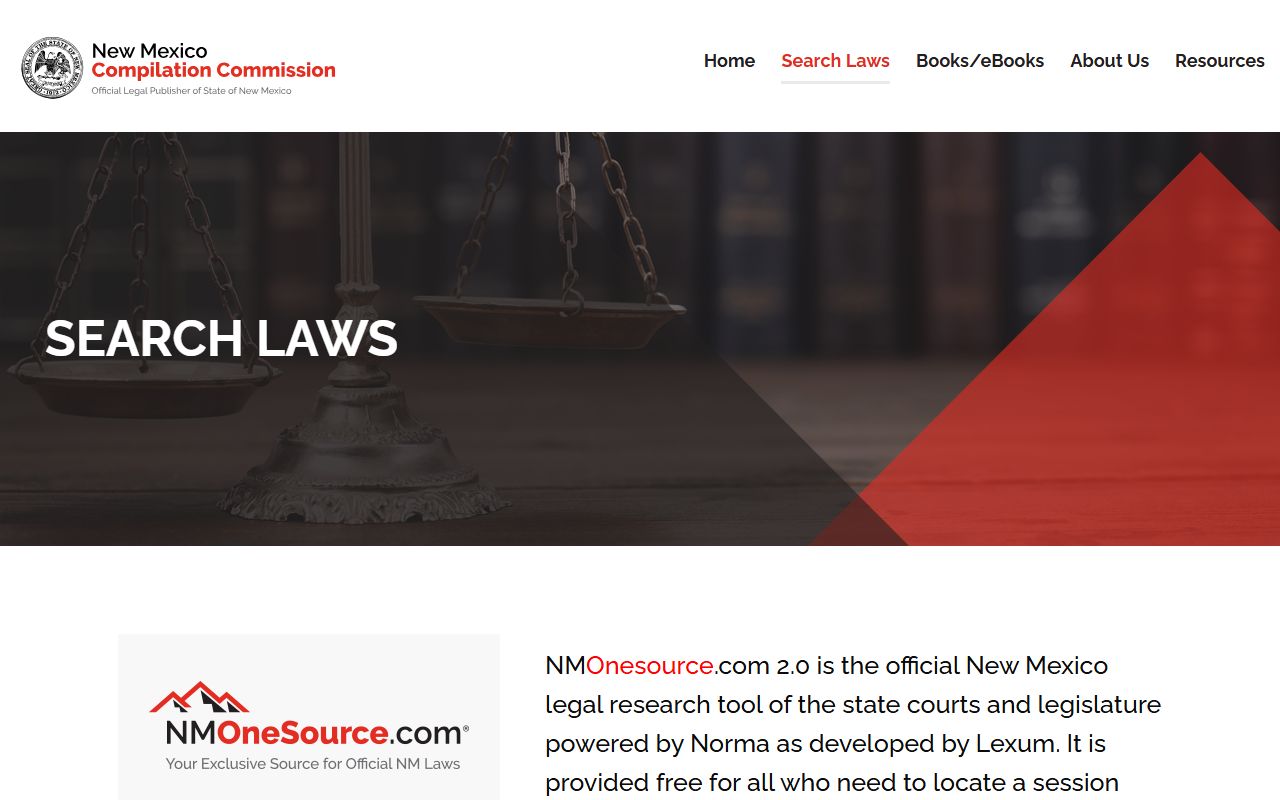
Because legal citations can change, court users should verify statutes and rules through NMOneSource or the issuing court before relying on a citation in a filing.
Background Check Considerations
Public criminal court records are not the same thing as a regulated employment, housing, credit, insurance, or tenant screening report. Court records can be incomplete, delayed, sealed, expunged, or mistaken if the wrong person is selected from a name search. Before using a San Miguel County record for a serious decision, verify the case number, date of birth when lawfully available, court location, disposition, and certified copy status directly with the court.
Important: This site is not a consumer reporting agency and court lookup information must not be used for FCRA-regulated decisions.
Restricted Criminal Court Records in San Miguel County
Do not expect public access to every criminal or criminal-adjacent file. Juvenile delinquency records are not ordinary public records. Adoption, mental health, medical, minor-related, and protected personal information may be restricted or redacted. Sealed and expunged records may not appear in ordinary public searches. Some protection-order and family-violence material may also be omitted or limited. If a record should exist but does not appear online, contact the court where the case was filed rather than assuming no case or no warrant exists.